Democracy is often described as one of humanity’s greatest achievements. It gives people a voice, protects individual freedoms, and creates systems where leaders are accountable to those they serve. Yet democracy is more than a political structure—it is a moral commitment. It is a promise that every person deserves dignity, justice, and the opportunity to live free from oppression.
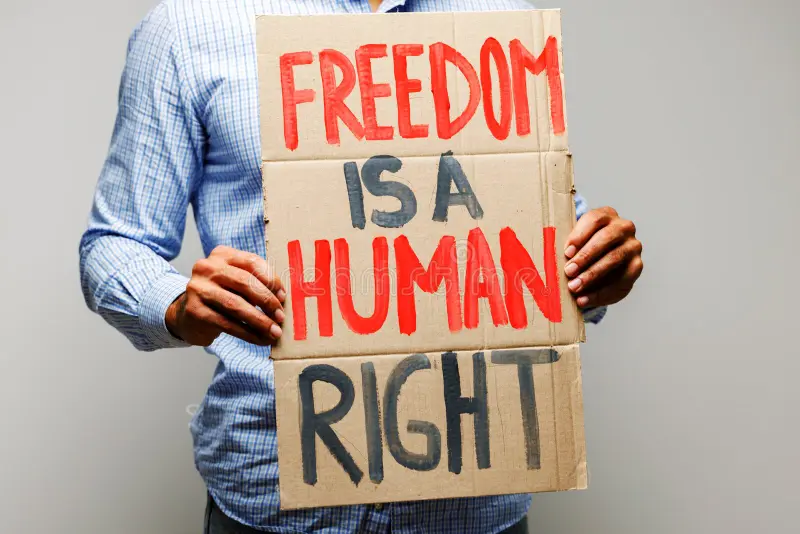
If we truly believe in democratic values, we cannot limit our concern to our own borders. Human rights are not privileges reserved for people fortunate enough to be born in peaceful or prosperous nations. They are universal. The right to live without fear, to speak freely, to worship according to one’s beliefs, to receive an education, and to determine one’s own future should belong to every human being, regardless of nationality, race, religion, or background.
History has repeatedly shown that injustice flourishes when it is ignored. Oppression often begins with the silencing of a few before spreading to many. When governments abuse their people, when minorities are persecuted, when civilians are caught in conflict, or when basic freedoms are stripped away, the consequences extend far beyond national borders. Human suffering is not confined by geography, and neither should our compassion be.
This does not mean that every conflict has a simple solution or that every nation should respond in the same way. International situations are often complex, with competing interests, historical grievances, and difficult choices. However, complexity should never become an excuse for indifference. Democracies have a responsibility to support international law, encourage peaceful solutions, provide humanitarian assistance, welcome those fleeing persecution where possible, and work with allies and international institutions to protect human rights and reduce suffering.
Standing up for what is right is not solely the responsibility of governments. It belongs to ordinary people as well. Every generation faces moments that test its values. Citizens can vote, volunteer, donate to trusted humanitarian organisations, support responsible journalism, challenge misinformation, and speak out against injustice wherever it occurs. These actions may seem small on their own, but together they strengthen the principles that democracy depends upon.
Freedom is not self-sustaining. It requires constant vigilance, participation, and courage. The rights many people enjoy today were secured because previous generations were willing to challenge discrimination, resist authoritarianism, and demand equality under the law. Those struggles remind us that progress is rarely automatic; it is achieved by people who refuse to accept injustice as inevitable.
At the same time, defending freedom requires humility. We must be willing to examine shortcomings within our own societies while advocating for the rights of others abroad. Democracy is strongest when it is willing to learn, improve, and uphold its values consistently rather than selectively.
Ultimately, the measure of a democracy is not only how well it protects the rights of its own citizens but also how faithfully it upholds the principle that all people possess inherent dignity. While nations may differ in culture, language, and political systems, our shared humanity creates a common responsibility to oppose oppression, support those affected by conflict, and work toward a world where human rights are respected everywhere.
A society that values freedom cannot remain indifferent to the suffering of others. The defence of liberty is not a national project alone—it is a human one. If we believe that democracy, justice, and human rights matter, then we must be prepared to defend those principles not only for ourselves but for everyone, wherever they may live.
Leave a Reply