A decade ago, many people in the UK—especially in London—remember a stronger sense of ease in daily life. That doesn’t mean everything was objectively “better,” but there was a broader feeling of stability: housing, while still expensive, felt marginally more attainable; public services, though strained, seemed less visibly overwhelmed; and the social atmosphere, particularly in a diverse city like London, often felt more cohesive. London has long prided itself on multiculturalism functioning not just as a demographic reality but as a lived experience—different communities sharing space with relatively high levels of tolerance.
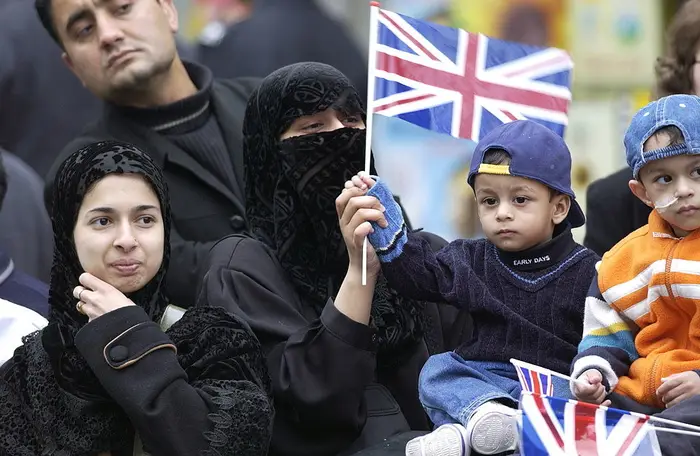
In recent years, however, that sense of cohesion has been challenged. Reports and public conversations around hate crimes, particularly those targeting visibly identifiable groups, have become more prominent and concerning. Among the most affected are Muslim women, especially those who wear visible markers of faith such as the hijab or niqab. The visibility that once symbolized diversity and coexistence can, in times of heightened tension, make individuals more vulnerable to hostility.
Understanding why this increase appears to be happening requires looking at several overlapping factors. One of the most significant is the broader climate of social and economic anxiety. Periods of economic strain—rising living costs, pressure on housing, and reduced public services—often correlate with increased scapegoating. When people feel insecure, some look for simple explanations or targets for their frustration, and minority groups can become unfairly singled out.
Another factor is the amplification effect of media and online platforms. Social media, in particular, can rapidly spread misinformation, stereotypes, or emotionally charged narratives. Negative portrayals of Muslims, often tied to global events or isolated incidents, can become generalized and internalized by audiences who lack direct personal interaction with Muslim communities. This creates an environment where prejudice can grow more easily and, in some cases, translate into real-world harassment or violence.
The international context also plays a role. Conflicts involving Muslim-majority regions or groups can influence perceptions at home, even when those conflicts are complex and distant. For some individuals, global tensions are simplified into “us versus them” narratives, which then spill over into local interactions. This is not new, but the speed and intensity with which global news circulates today can heighten emotional reactions and reduce nuance. Muslim women, as visible representatives of their faith, can unfairly bear the brunt of these reactions.
It’s also important to consider the role of political and public discourse. Language used by public figures, media outlets, and commentators can either calm tensions or inflame them. When rhetoric becomes divisive or frames certain groups as “other,” it can legitimize prejudice in subtle but powerful ways. Even when not explicitly hateful, repeated negative framing contributes to an environment where bias feels more acceptable.
Addressing this issue requires a combination of practical and cultural responses. Law enforcement plays a role in ensuring that hate crimes are taken seriously, reported accurately, and prosecuted where appropriate. Visible accountability can deter future incidents and reassure affected communities that their safety matters.
Education is equally important. Long-term change depends on increasing understanding between communities, starting from schools and extending into workplaces and public life. Programs that encourage interaction, dialogue, and shared experiences can reduce the fear and suspicion that often underpin prejudice.
Media responsibility also matters. Balanced reporting, careful use of language, and a willingness to challenge misinformation can help shift the tone of public conversation. Likewise, individuals have a role in questioning what they see and hear, rather than accepting simplified narratives.
Community-level initiatives can be particularly effective. Local organizations, faith groups, and civic bodies can create spaces where people from different backgrounds engage with one another in meaningful ways. When relationships are built on familiarity rather than assumptions, hostility tends to decrease.
Ultimately, while it may feel that life was “better” ten years ago, what people are often reacting to is a perceived loss of social trust and cohesion. Rebuilding that trust requires effort across multiple levels of society. The rise in hate crimes, especially toward Muslim women, is not inevitable—it is shaped by conditions that can be addressed. Recognizing the complexity of the issue, rather than reducing it to a single cause, is an essential first step toward meaningful change.
Leave a Reply