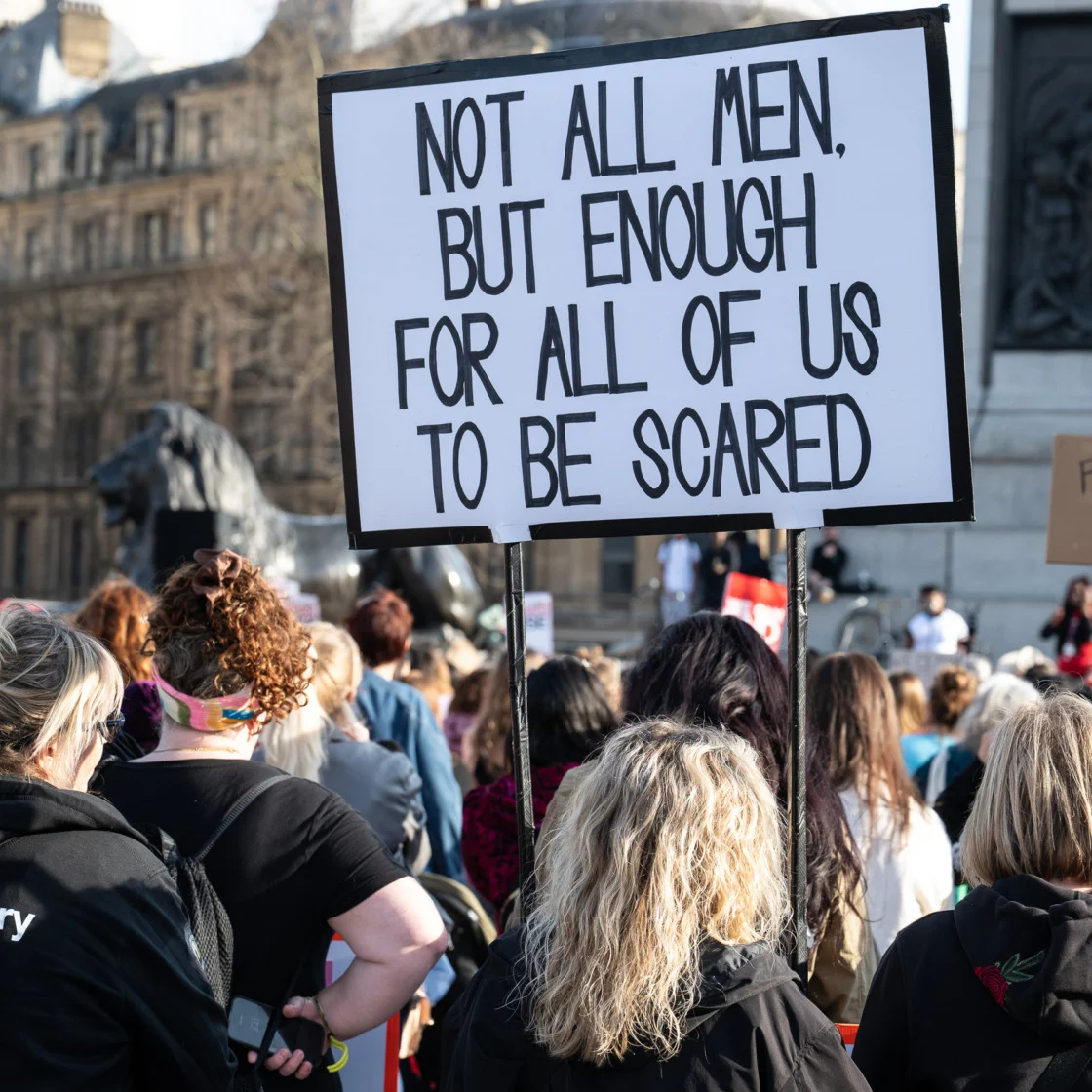
Violence against women and girls remains one of the UK’s most persistent social failures. For all the new laws, official strategies, and headline commitments, the basic picture has changed far too slowly: too many women and girls are still living with domestic abuse, sexual violence, stalking, coercive control, and the long aftershocks that follow. The government’s own strategy now says it aims to halve violence against women and girls in a decade, but the scale of harm remains stubbornly high. (GOV.UK)
The latest figures underline just how large the problem still is. The Office for National Statistics estimated that around 900,000 people aged 16 and over experienced sexual assault in the year ending March 2025, including 739,000 women. It also estimated that 10.6% of people aged 16 and over — about 5.1 million people — experienced domestic abuse, sexual assault or stalking in the last year. Domestic abuse alone was estimated to have affected around 25.8% of people aged 16 and over since the age of 16, while stalking affected about 2.9% in the last year. (Office for National Statistics)
That reality sits awkwardly beside the language of progress. The UK has passed major reforms in recent years, including the Domestic Abuse Act 2021, which created a statutory definition of domestic abuse and was designed to strengthen support for victims and improve the justice response. The Victims and Prisoners Act 2024 was also introduced to improve end-to-end support for victims and reinforce victims’ rights. On paper, the legal framework is stronger than it was a few years ago. (Legislation.gov.uk)
But stronger legislation has not translated into a sense of safety for many survivors, or into the kind of systemic change campaigners have demanded for years. The Crown Prosecution Service has now updated its Violence Against Women and Girls Strategy for 2025–2030, promising better casework quality, stronger support for victims, and increased public trust. The government has also published further action plans and evidence reviews as it prepares its next VAWG strategy. Those commitments matter, but they also reflect an uncomfortable truth: the problem is still serious enough to require yet another reset. (Crown Prosecution Service)
For survivors, the gap between policy and lived experience is often the most painful part. A law can define abuse clearly, but it cannot by itself guarantee that a victim will be believed, protected, housed, treated, or supported quickly enough. Nor can it erase the fear that many women feel when reporting abuse, especially when they have previously been failed by police, health services, courts, or social services. That is why so many survivors describe the system as something they must fight through rather than something that carries them. (Legislation.gov.uk)
Technology and online abuse have made the picture even more complex. The Online Safety Act now explicitly covers forms of illegal content including intimate image abuse, controlling or coercive behaviour, sexual exploitation, and extreme sexual violence. That is an important step, but it also shows how violence against women and girls is evolving faster than many institutions can respond. Abuse no longer happens only in private homes or on dark streets; it can follow victims into their phones, their workplaces, and their daily lives. (GOV.UK)
The most sobering lesson is that legislation alone does not end violence. It creates tools, duties, and powers. It can improve accountability. It can widen the legal definition of harm. But it does not, on its own, change the culture that excuses abuse, the delays that wear victims down, or the inconsistency that leaves so many women and girls exposed. Until protection is felt in everyday life, not just written into statute books and strategy papers, the crisis will remain what it is now: deeply understood, repeatedly acknowledged, and still not fixed. (GOV.UK)
Leave a Reply