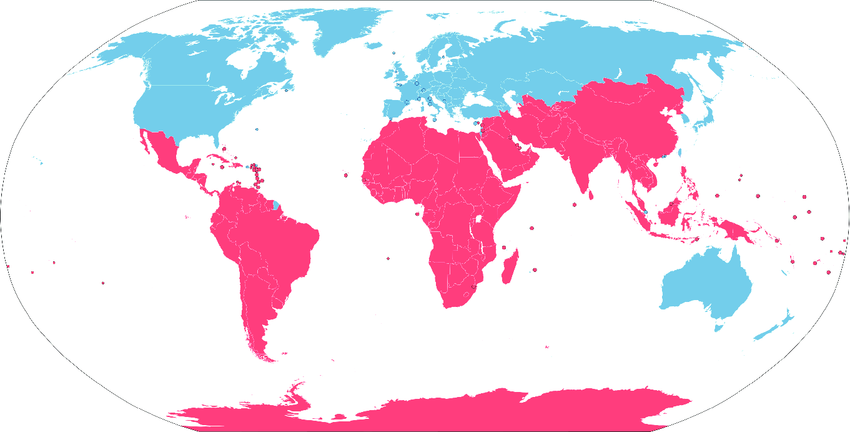
In 2025, the dynamics of the relationship between the Global South and Global North are expected to undergo significant transformation, influenced by a multitude of socioeconomic and political factors. The Global South, comprising developing nations in Africa, Latin America, Asia, and parts of the Middle East, is poised for enhanced economic development. This growth is likely to be driven by several key elements, including rapid advancements in technology, which will facilitate innovation and efficiency across various sectors. Increased investment, particularly in renewable energy and digital innovation, will play a crucial role in this development. As countries in the Global South harness their natural resources and invest in sustainable practices, they may emerge as leaders in the global transition towards greener economies.
In contrast, the Global North, which includes developed nations in North America, Europe, and parts of Asia, may face a series of challenges that could hinder its economic stability and growth. Demographic changes, such as aging populations and declining birth rates, will place additional strain on social welfare systems and labour markets. Furthermore, the impacts of climate change—manifesting as extreme weather events, rising sea levels, and resource scarcity—will necessitate urgent and cooperative responses. The Global North will increasingly recognise that addressing these challenges requires collaboration with the Global South, as many developing countries are on the front lines of climate change and possess valuable insights and solutions.
On the geopolitical stage, there is likely to be a shift towards a more equitable distribution of power within international institutions. As developing countries gain influence and assert their interests, there may be calls for reforms in organisations such as the United Nations, World Bank and International Monetary Fund. This shift could lead to a more inclusive decision-making process that reflects the voices and needs of a broader range of nations, rather than being dominated by a few powerful states.
Ultimately, the interactions between the Global South and Global North will be characterised by their interdependence and the shared challenges they face. Issues such as climate change, economic inequality, and global health crises will require collaborative approaches that transcend geographical boundaries. As both regions navigate these complexities, they may find opportunities for mutual benefit, fostering partnerships that promote sustainable development, technological exchange, and cultural understanding. The future relationship between the Global South and Global North will thus be defined not only by competition but also by cooperation, as both sides recognise the necessity of working together to build a more equitable and sustainable world.
Leave a Reply